The Fitlab
Nutrition Shop
Most people don't come to supplements looking for miracles. They come because something specific isn't working — energy that runs out by three in the afternoon, an appetite that seems to have its own agenda, a digestive system that has become noticeably less forgiving than it used to be. What they want is something sensible to add to a routine they're already trying to keep, and something that doesn't insult their intelligence in the process.
A Small Range, Kept Small on Purpose
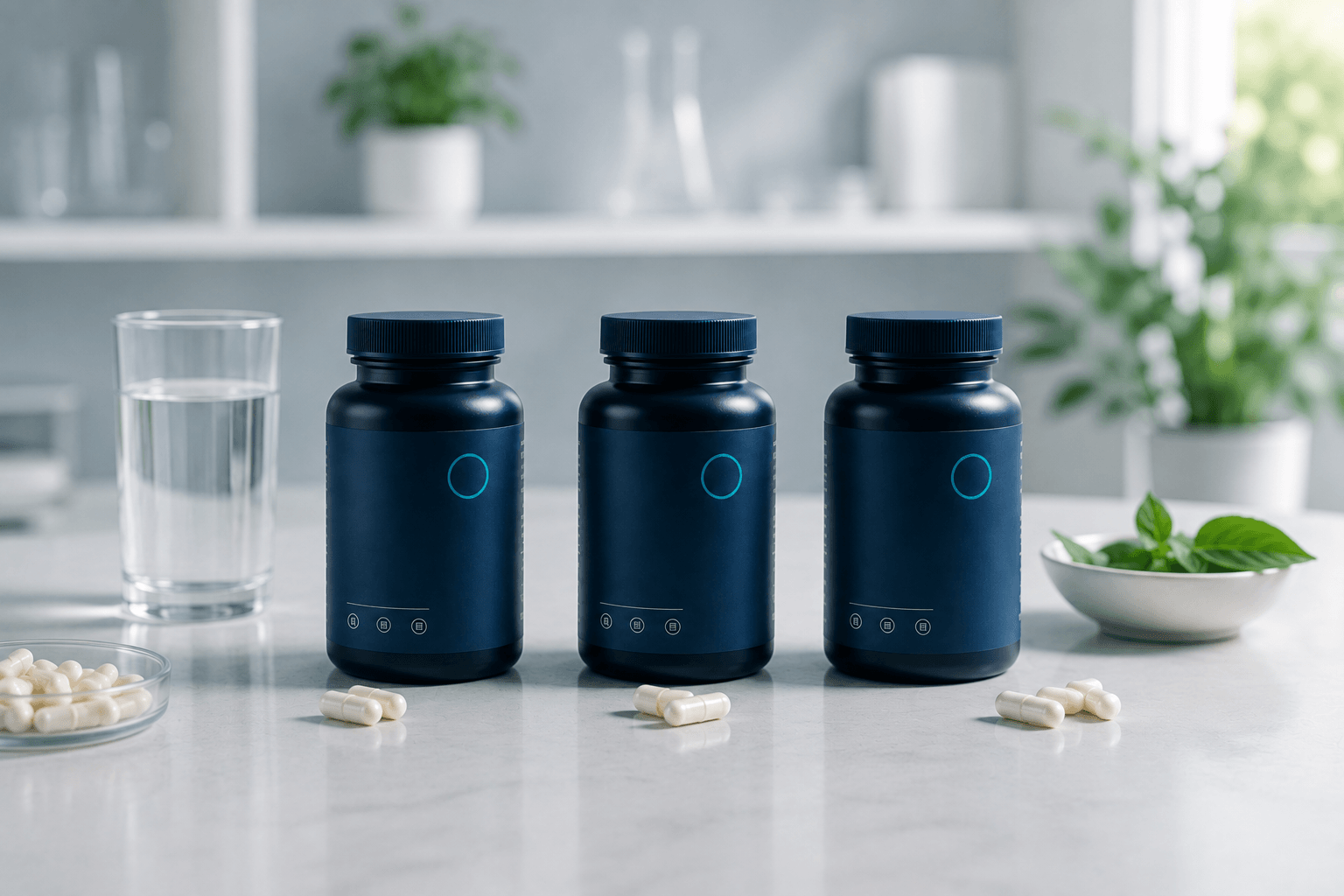
That's the spirit in which this range is put together. Fitlab Nutrition keeps its shop deliberately small: three daily capsule formulas, each built around a clear purpose rather than a long list of vaguely impressive ingredients. There's no attempt here to cover every category at once, and no pretence that a capsule can stand in for sleep, decent food, or moving your body regularly. A shelf with three well-considered products on it is more useful than a shelf with thirty, because it forces an actual decision rather than an overwhelmed one.
There's a reason the range looks like this. Supplement ranges tend to sprawl, because it's commercially easier to add a product than to justify one. The result, for the person buying, is a wall of near-identical bottles with overlapping ingredients and no clear way to choose between them. Narrowing things down to three means each formula has to earn its place, and it means the differences between them are genuine rather than cosmetic.
Each formula is made in the UK to HACCP standards, and each is vegan, non-GMO and free from gluten and the more common allergens. Beyond those shared basics, the three products are quite different from one another. One is stimulant-based and built around energy and thermogenesis. One is stimulant-free and works on appetite signalling and metabolic pathways. One is aimed squarely at digestive balance and the health of the gut environment. They suit different people, they suit different goals, and in some cases they suit different phases of the same person's year — the formula that makes sense in January is not necessarily the one that makes sense in September.
What follows is an honest walkthrough of each: what it actually is, who it tends to suit, what's inside it, and how it fits alongside everything else you're already doing. There's also a note at the end on quality, sourcing and sensible use, which is worth reading even if you skim the rest.
One framing point before we start. Supplements are the smallest lever in the room. Sleep is a bigger lever. Food is a bigger lever. Regular movement is a bigger lever. Anyone who tells you otherwise is selling something badly. Used properly, though, small levers still move things — particularly when they're the lever you can actually reach on a difficult week.
Smart Weighto
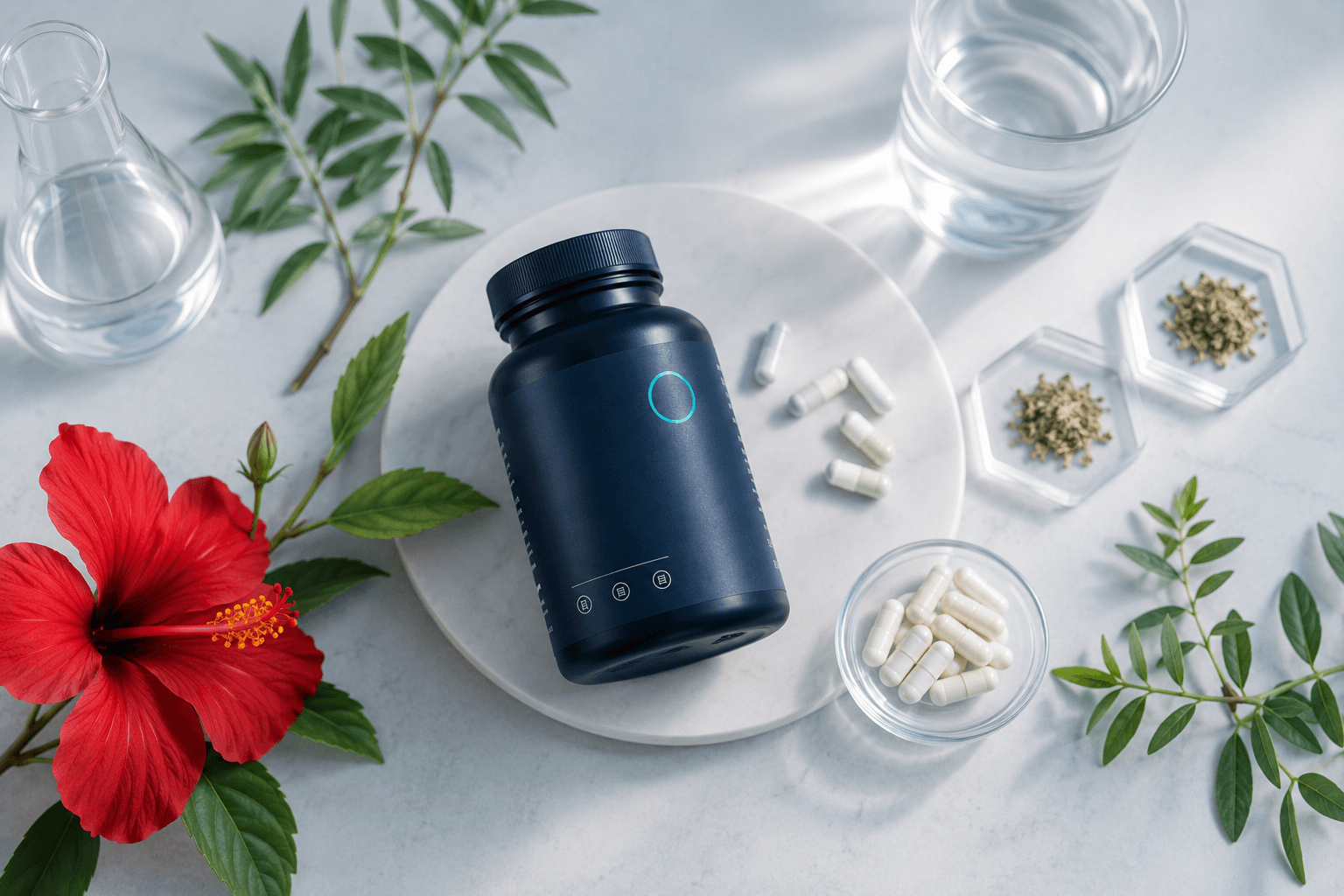
Smart Weighto is a daily food supplement in capsule form, built around two ingredients that most people will already recognise: naturally sourced caffeine and green tea extract. It sits in the energy and weight management corner of the Fitlab Nutrition range, and it's the only one of the three formulas that contains a stimulant. If you're sensitive to caffeine, that single fact tells you most of what you need to know about whether this is your product.
Understanding the Formula
The intended pattern of use is straightforward — one capsule in the morning, one in the mid-afternoon, each with a full glass of water. The split dosing isn't decoration. Taking both capsules at once produces a sharper peak and a correspondingly sharper drop a few hours later, which is precisely the pattern most people are trying to get away from. Spacing them keeps the support steadier across the working day.
Newcomers, or anyone who knows they're sensitive to caffeine, are advised to spend the first five days on a single morning capsule before moving to the full two. This isn't a marketing formality. Caffeine tolerance varies enormously between individuals — genetics, habitual intake and body weight all play a part — and finding out where you sit on that spectrum with a half dose is considerably more pleasant than finding out with a full one. People who already use stimulant supplements regularly can generally start at two.
Neither dose should be taken within about six hours of bedtime, for reasons that will be obvious to anyone who has ever had an ill-timed espresso. If you take a capsule with food, particularly when you're prone to reflux, that's usually more comfortable than taking it on an empty stomach.
It's worth being clear about what this kind of formula does and doesn't do. Caffeine and green tea catechins have been studied for their effects on alertness, energy expenditure and fat oxidation, and the research is reasonably substantial — caffeine in particular is among the most-studied compounds in the whole of sports nutrition. But the effects reported in those studies are modest, and they accumulate slowly. Nobody in a well-run trial loses a stone because of a capsule. Smart Weighto is best understood as daily support for effort you're already making, not a substitute for it.
Who It May Suit
The most obvious fit is someone who trains regularly and wants a little more out of sessions that are already happening. If you're getting to the gym four or five times a week and the limiting factor is turning up with energy rather than knowing what to do once you're there, a timed caffeine dose is a practical tool. Taken thirty to forty-five minutes before a morning session, it's active by the time you're warming up.
It also suits people whose days simply run long. Shift workers, students in exam season, parents doing the second shift after the children are down, anyone whose concentration has to hold past the point where it naturally wants to fade — the mid-afternoon capsule exists precisely because that's where most people's day quietly falls apart. It's rarely the morning that ruins good intentions; it's four o'clock, when the training session gets postponed and the food choices get impulsive.
There's a third group worth naming, which is people at the very beginning of a change in habits. The hardest part of any new routine isn't the plan, it's the daily friction of executing it while tired. Support that makes the first few weeks feel slightly less like wading through treacle has a real, if indirect, value — not because the capsule does the work, but because it makes it marginally more likely that you do.
Equally important is who it doesn't suit. It isn't appropriate for anyone under 18, for people who are pregnant or breastfeeding, or for anyone who reacts badly to stimulants — if caffeine reliably makes you jittery, anxious or unable to settle, adding more of it is not going to end well. If you're taking prescribed medication, or you already drink a fair amount of coffee, it's worth having a conversation with a pharmacist or GP first and doing a rough tally of your total daily caffeine before adding anything else in. Anyone with a heart condition, high blood pressure or an anxiety disorder should treat medical advice as a prerequisite rather than an afterthought.
What Is Inside It
Naturally sourced caffeine. Plant-derived rather than synthetic, which is a formulation preference rather than a claim of superiority — the molecule behaves the same way either way. Caffeine is among the most researched compounds in nutrition, and its effects on alertness, perceived exertion during exercise and short-term energy expenditure are well documented. It works largely by blocking adenosine receptors, which is the mechanism behind the familiar sense of the fog lifting. It also has a half-life of roughly five to six hours in most adults, which is why timing matters as much as dose, and why the evening cut-off is non-negotiable rather than cautious.
Green tea extract, standardised for EGCG. Epigallocatechin gallate is the most abundant catechin in green tea and the compound most of the metabolic research focuses on. It accounts for a substantial share of green tea's total catechin content and is studied for its antioxidant activity as well as its interaction with the pathways involved in how the body selects fuel. Research in this area generally examines the caffeine–catechin pairing together rather than either compound in isolation, which is part of the rationale for combining them in one capsule rather than leaving people to stack them themselves.
The standardisation point is worth dwelling on briefly. "Green tea extract" on a label can mean very different things depending on how the extract has been prepared. Standardising for EGCG content means the amount of the active compound is specified and consistent between batches, rather than varying with whatever raw material happened to be available.
The formula is free from GMOs, artificial preservatives, gluten, lactose, nuts, fish, eggs and both pork and beef gelatine, and is suitable for vegan, vegetarian and Halal diets. Every batch is produced in the UK under HACCP practice and tested for purity.
How It Fits Into a Wider Routine
Honestly? It fits underneath everything else. Caffeine is a tool for getting more out of a session you were going to do anyway; it doesn't create the session. The people who get the most from a formula like this are the ones who have already sorted out roughly what they're eating and roughly when they're training, and who are looking to raise the floor on their worst days rather than the ceiling on their best.
Hydration matters here too — two litres of water a day is a sensible floor, and more if you're training hard or the weather is against you. Dehydration produces fatigue that no stimulant will properly mask, and it tends to be the first thing to slip when a schedule gets busy.
Nutrition remains where the actual results are made. If fat loss is the goal, a modest and sustainable calorie deficit does the work; the formula supports the consistency that makes the deficit survivable. If performance is the goal, adequate protein and enough carbohydrate around training will matter far more than anything in a capsule.
And sleep is not negotiable. A stimulant that pushes your bedtime back an hour is costing you more than it's giving you, which is the entire reason for the six-hour cut-off. Sleep is also, awkwardly, one of the strongest influences on appetite regulation and recovery — so a supplement routine that quietly erodes it is working against the goal it was bought for. If you find yourself needing the second capsule later and later in the day, that's a signal to look at what's happening to your sleep, not a signal to move the dose.
Consistency, unglamorously, is where most of the benefit lives. A capsule taken most days for two months does considerably more than a capsule taken religiously for nine days and then forgotten in a drawer.
Weight Management Support Plus
Weight Management Support Plus is a once-daily, stimulant-free capsule built around Metabolaid®, a patented botanical blend of hibiscus and lemon verbena developed by the Spanish ingredient manufacturer Monteloeder. It's the most research-heavy product in the Fitlab Nutrition range, and it approaches weight management from a completely different angle to Smart Weighto — appetite signalling and metabolic pathways rather than stimulation. If Smart Weighto is about having more energy to do the work, this is about making the work require slightly less willpower.
Understanding the Formula
The daily dose is one capsule with water, ideally taken with or just before a meal. That timing isn't arbitrary: the appetite-related effects studied for this ingredient are tied to what happens around eating, so taking it in a vacuum at 11pm misses the point of the mechanism. Most people find it easiest to attach it to whichever meal they never skip.
Because the formula contains no stimulant, it has no bearing on sleep and no cut-off time. That makes it unusually easy to sustain — there's no window to miss and no trade-off to manage — which matters more than it sounds, given that the main reason supplement routines fail is that they're inconvenient.
A word on expectations. The research behind Metabolaid® is unusually detailed for a botanical ingredient: several peer-reviewed trials published in journals including the European Journal of Nutrition, Foods and the Journal of Functional Foods, alongside consumer studies, with hundreds of participants across the full body of work and objective measurement methods rather than self-report alone. What those studies describe are measurable but moderate shifts — in satiety-related hormone levels, in cardiovascular markers, in self-reported cravings and eating behaviour — observed over weeks and months of consistent daily use.
They do not describe dramatic transformations, and any claim that they do should be treated with suspicion, including if it comes from us. A supplement with genuine evidence behind it has less need to exaggerate, not more.
Who It May Suit
The clearest fit is someone who finds the behavioural side of weight management the hard part. If you know perfectly well what to eat and simply struggle to stop eating it, or if hunger between meals derails you long before dinner does, the appetite-signalling angle is the relevant one here. A great deal of what gets labelled willpower is actually hormonal, and framing it as a character failing has helped approximately nobody. Appetite is a signal, not a moral test, and supporting the signalling is a more sensible target than trying to out-stubborn it.
It also tends to appeal to people who read labels and want references. If you're the sort who wants to see the study before you take the capsule — and there are more of you every year, which is a good thing for the industry — this is the product in the range with the most literature attached to it. The clinical dose used across that literature is 500 mg per day, and that's the dose in the capsule, which is a detail worth checking on any supplement you buy. Ingredients are frequently included at a fraction of their studied dose so they can appear on a label.
A third group is people who have come off, or are tapering from, prescribed GLP-1 medications such as semaglutide or tirzepatide, and are looking for something to support their routine afterwards. This needs saying plainly, and not in small print: a botanical supplement is not equivalent to a prescription medicine, does not work at the same scale, and is not a replacement for one. The appetite rebound that many people experience after stopping these medications is a genuine physiological event rather than a lapse in discipline, and it deserves a proper clinical conversation. Anyone in this situation should be making decisions with their prescribing clinician, not with a product page.
It isn't suitable for under-18s, for people who are pregnant or breastfeeding, or for anyone currently taking GLP-1 medication or prescription treatment for blood pressure, blood glucose or cholesterol without medical clearance first. That last category matters because the ingredient has been studied for effects on those same markers — which is exactly why combining it with medication aimed at them needs a doctor's input rather than guesswork.
What Is Inside It
Metabolaid® — hibiscus and lemon verbena. Hibiscus sabdariffa contributes anthocyanins, the pigments responsible for its deep red colour, which are studied for antioxidant activity. Lemon verbena (Lippia citriodora) contributes polyphenols, principally verbascoside. Both plants have long histories of traditional use, which is a starting point for research rather than evidence in itself.
The patented aspect is the combination rather than either plant alone. Research on the blend reports greater activity on the AMPK pathway than either ingredient produces individually. AMPK is a cellular enzyme involved in energy regulation — broadly, it's part of how cells decide between burning glucose and drawing on stored fat. It's a slow, quiet mechanism rather than anything you feel, which is worth knowing so you don't spend the first fortnight waiting for a sensation that isn't coming.
The other studied pathway relates to GLP-1, a hormone released in the gut that contributes to the sense of fullness after eating and influences how quickly the stomach empties. It's the same biological system that prescription GLP-1 medicines act on, though — to repeat the point, because it genuinely matters — at an entirely different order of magnitude. A botanical that supports the body's own signalling is not the same category of intervention as a pharmaceutical analogue.
Chromium. Included as a supporting nutrient. Chromium contributes to normal macronutrient metabolism and to the maintenance of normal blood glucose levels — a modest, well-established role rather than a headline ingredient.
The formula is vegan, non-GMO, gluten-free, stimulant-free and free from common allergens, manufactured in the UK to HACCP standards and third-party tested. The Metabolaid® ingredient itself is produced under BRC/NSF, ISO 9001:2015 and HACCP certification.
How It Fits Into a Wider Routine
Because there's no stimulant in it, this one is easy to place — it doesn't compete for space in your day and it won't affect your sleep. Taking it with a meal, at roughly the same meal each day, is the simplest way to make it stick. Attaching a new habit to an existing one is the oldest trick in behaviour change, and it works.
It can be taken alongside Smart Weighto, and the two are aimed at different mechanisms rather than duplicating each other. If you do combine them, keep an eye on your overall caffeine intake from all sources rather than assuming the two formulas balance out; the stimulant-free product doesn't offset the stimulant-containing one.
The realistic timeline is worth setting out properly, because impatience is what ends most supplement routines. Appetite and craving-related changes, where people notice them, tend to appear within the first few weeks. Anything relating to the gut microbiome or cardiovascular markers accumulates over a couple of months of uninterrupted daily use — these are not effects you will feel arriving, and they are not effects worth judging after ten days. A mild digestive adjustment in the first week is not unusual and generally settles.
This is a slow, boring, everyday product, and it works best when treated as one. Meanwhile the fundamentals still do the heavy lifting: protein-adequate meals, some form of resistance training to preserve lean mass, enough sleep to keep appetite hormones behaving reasonably, and a modest calorie deficit if fat loss is the goal. The supplement supports the plan. It is not the plan.
Daily Biome
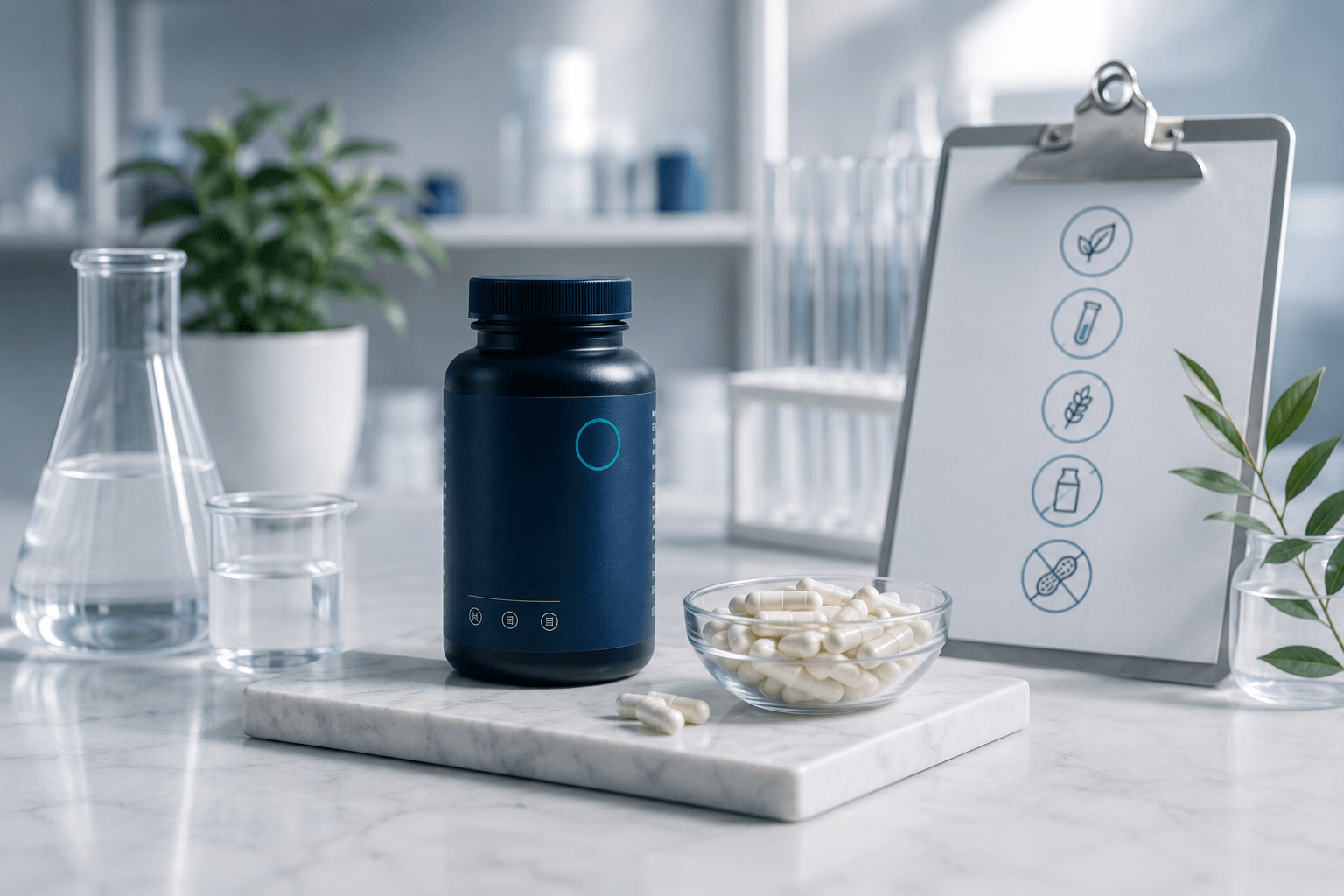
Daily Biome is a once-daily gut support capsule, and it's the broadest formula in the range. Rather than being a straightforward probiotic, it combines five elements: live cultures, prebiotic fibre, botanical extracts traditionally used for digestion, gut-lining nutrients, and an absorption aid. The idea behind the design is that these components support one another — live bacteria do better when there's fibre for them to feed on, for instance, and curcumin is poorly absorbed without something to help it along — rather than each doing its own isolated job in the same capsule.
Understanding the Formula
One capsule daily with water. That's the whole protocol, which is deliberate: gut routines that require timing, refrigeration or multiple doses tend not to survive contact with a normal week. As the capsule moves through the digestive tract, the botanical components act from the stomach onwards while the fibre and live cultures pass through to the large intestine, which is where they're meant to end up.
Gut health is an area where the science is genuinely exciting and genuinely unsettled, and it's worth saying so rather than pretending otherwise. A great deal remains unknown about which bacterial strains help which people, and the field is moving quickly enough that confident claims tend to age badly. What can reasonably be said is that a varied microbiome is associated with better digestive comfort and broader aspects of health, and that live cultures and prebiotic fibre are a sensible way to support that alongside a fibre-rich diet. That's a more modest statement than most gut supplements make, and it has the advantage of being defensible.
Who It May Suit
People with everyday digestive irregularity are the core audience — bloating after meals, an unpredictable rhythm, the general sense that things aren't settling as they should. These are common, low-grade complaints that rarely warrant a doctor's appointment but make ordinary days less comfortable than they need to be.
It's also commonly used by people who have recently had a course of antibiotics. Antibiotics do their job indiscriminately, and the gut environment takes time to re-establish afterwards; supporting that period with live cultures and prebiotic fibre is a reasonable, if unglamorous, thing to do. Similarly, anyone whose diet has been narrower than they'd like — through travel, a heavy work period, illness, or a stretch of eating whatever happened to be available — may find it useful as a bridge back to normal.
It's a reasonable option for anyone who eats a fairly restricted diet and knows their fibre intake is low. It should be said clearly, though, that a capsule of inulin is not a substitute for eating more plants. Dietary variety remains by some distance the most effective way to support a diverse microbiome, and a supplement is a supplement.
There's a broader group who take something like this simply as daily maintenance, in the same spirit as a multivitamin — not because anything is wrong, but because they'd rather support the system than wait for it to complain. That's a legitimate reason to use it, provided the expectations are proportionate.
It's not suitable for children, and pregnant or breastfeeding women should check with a healthcare professional first. Anyone taking immunosuppressant medication should speak to their doctor before taking live cultures of any kind — this is a genuine precaution rather than a formality. Anyone with a known allergy to a listed ingredient should read the full label carefully, and anyone with a diagnosed digestive condition should be treating medical advice as the first step rather than the last.
What Is Inside It
Live cultures — 5 billion CFU per capsule. Three strains: Bifidobacterium longum, Lactobacillus acidophilus and Lactobacillus rhamnosus. All three are well-established, widely studied strains rather than novelty inclusions chosen for how they look on a label. Higher CFU counts are not automatically better, incidentally — strain selection and survival through the digestive tract matter at least as much as the headline number, which is why very large CFU claims should be read with some care.
Chicory root fibre (inulin). A prebiotic — food for the bacteria already living in your gut, and for the ones arriving in the capsule alongside it. Pairing prebiotic fibre with live cultures is a more considered approach than including either on its own.
Turmeric root extract, standardised to 95% curcuminoids, paired with black pepper extract. The pepper is there for a specific reason: piperine substantially improves the absorption of curcumin, which is otherwise poorly taken up by the body. Turmeric on its own in a formula is often a wasted ingredient.
Ginger root extract, standardised to 5% gingerols, and dandelion root extract at a 4:1 concentration — both long-standing botanicals in traditional digestive preparations, included here in standardised rather than unspecified form.
Marshmallow root and L-glutamine. Marshmallow root is traditionally used for its mucilage content. L-glutamine is an amino acid used as a fuel source by the cells lining the intestine, and it appears widely in formulas aimed at the gut lining.
The formula is UK-manufactured, vegan, free from common allergens and third-party tested for quality and purity.
How It Fits Into a Wider Routine
Gut support responds to consistency more than almost anything else, so the useful advice is dull: take it at the same time each day and give it several weeks before drawing any conclusions. Some people notice changes within a fortnight; others take longer, and a small number find the first week involves a bit of adjustment as the balance shifts. That settling period is normal, though anything genuinely uncomfortable or persistent is a reason to stop and ask a professional rather than push through.
It pairs naturally with the things that actually build a diverse microbiome, and those are worth naming because they're free. A wide range of plants across the week — the often-quoted target of thirty different plant foods is a useful prompt, even if the number itself is rough. Fermented foods, where you enjoy them, rather than forcing down something you dislike. Enough water. Enough fibre from actual food. Reasonable sleep.
Stress is a real and frequently ignored factor here too. The gut and the nervous system are closely connected, and a capsule won't out-run a chaotic month. If your digestion reliably falls apart during high-pressure periods, that's useful information about where the intervention actually needs to go.
Because it's stimulant-free and taken once daily, Daily Biome can sit alongside either of the other two formulas without any timing conflict or overlap in ingredients. For a lot of people it's the product they end up taking longest, precisely because it asks so little.
How These Products Are Made, and How to Use Them Sensibly
A supplement range is only as good as what it's willing to tell you. All three Fitlab Nutrition formulas are produced in the UK under HACCP food-safety practice, formulated to meet current UK legislation, and tested for purity. They are vegan, non-GMO, and free from gluten, lactose, nuts, fish, eggs and gelatine. Full ingredient lists and supplement facts panels appear on every label, and it's worth reading them properly — particularly if you're taking more than one product, or combining any of them with something bought elsewhere. Ingredient overlap between products from different brands is one of the more common ways people end up taking more of something than they intended.
Standardised extracts are used where standardisation is meaningful, and doses are set at the levels used in the relevant research rather than at whatever amount is cheapest to include. That second point is where a great many supplements quietly fall down: an ingredient can appear on a label at a tenth of its studied dose and still look impressive to someone reading quickly.
Being straightforward about limits matters more than being enthusiastic about benefits. None of these products are medicines. None of them will fix a diet that isn't working, compensate for chronic under-sleeping, or replace medical treatment for a diagnosed condition. What a well-formulated supplement can do is provide consistent, low-effort support for a routine you're already trying to maintain — and for a lot of people, that consistency is precisely the thing that's missing. It's a supporting role, and there's no shame in that.
A Few Principles Worth Holding On To
None of the following is complicated, and all of it makes a supplement routine easier to judge honestly.
Start with one thing. If you're new to supplements, introduce one product and give it a fair run before adding another. It's the only way to know what's doing what — and if something doesn't agree with you, it's the only way to know which thing to stop.
Respect the stated dose. More is not faster. Exceeding a recommended dose rarely accelerates anything and, with a stimulant-containing formula in particular, can be actively counterproductive.
Give it time. Almost nothing in this category works in days. Four to eight weeks of consistent daily use is a fair test, and judging any of these products after a week tells you very little except how you feel about waiting.
Stop if something feels wrong. Mild digestive adjustment in the first week is not unusual. Anything persistent, painful or unusual is a reason to stop and speak to a healthcare professional rather than assume it will settle.
Check before you combine. Adults can generally tolerate up to around 400 mg of caffeine daily, but that ceiling includes your coffee, your tea, your energy drinks and your pre-workout as well as any supplement.
Keep the basics in view. If sleep, food and movement aren't roughly in order, sorting them out will do more than any capsule — and will also make it far easier to tell whether a supplement is doing anything at all.
Where a Short Conversation Helps
Age, medication, pregnancy and existing health conditions all change the calculation, and none of them are edge cases. If any apply to you, a short conversation with a pharmacist or GP is a sensible first step before starting anything new. Pharmacists in particular are an underused resource: the advice is free, immediate, and specifically good at spotting interactions.
A Wellbeing Note
Food supplements are intended to support a varied and balanced diet, not to replace one. They are not medicines and are not a substitute for professional medical advice, diagnosis or treatment. Do not exceed the stated dose. If you are pregnant, breastfeeding, taking any medication or managing a health condition, speak to your doctor or pharmacist before use. These products are intended for adults; keep them out of reach of children, store them somewhere cool and dry, and don't use them if the seal has been tampered with. Individual responses vary, and no supplement can guarantee a particular outcome.